


Technical Support

  • 2026-07-12 17:59:38

    Compliance Guide for National Standards, Factory Acceptance, and Annual Inspection of Light-Duty Lifting Systems

    As specialized equipment, light-duty lifting systems are subject to national regulations and industry standards throughout their entire lifecycle—including design and manufacturing, factory acceptance testing, installation and commissioning, daily operation, and annual inspections. Enterprises must
  • 2026-07-12 17:59:19

    Technical Scheme for Optimized Design and Intelligent Upgrading of Lightweight Lifting Systems Focusing on Energy Efficiency and Noise Reduction

    With the rapid advancement of green, low-carbon industrial practices and intelligent manufacturing, light-duty lifting systems are evolving from traditional mechanical equipment toward designs that are lightweight, energy-efficient, quiet, and intelligent. Traditional light-duty cranes suffer from i

  • 2026-07-12 17:59:00

    Selection and Application Value of Lightweight Lifting Systems Across Various Operating Conditions

    Light-duty lifting systems offer a diverse range of products and exceptional adaptability. Tailored equipment solutions can be matched to specific industrial scenarios based on load capacity, operational frequency, spatial constraints, environmental conditions, and work patterns. These systems are w

  • 2026-07-12 17:58:41

    Safety Operating Procedures and End-to-End Risk Prevention and Control System for Light-Duty Lifting Systems

    Although the lightweight lifting system has a small load and is easy to operate, it still belongs to the national statutory special equipment. There are safety risks in lifting operations such as hanging heavy objects, mechanical transmission, high-altitude lifting, and equipment overturning. unlice

  • 2026-07-12 17:58:20

    Causes of Frequent Failures, Precise Troubleshooting, and Repair Techniques for Light-Duty Lifting Systems

    Light-duty lifting systems are prone to various issues—such as mechanical transmission failures, abnormal lifting, operational misalignment, loss of electrical control, and safety device malfunctions—due to factors like frequent start-stop cycles, heavy alternating loads, complex operating conditi

  • 2026-07-12 17:58:00

    Daily Operation and Maintenance System and Technical Specifications for Tiered Maintenance of Light-Duty Lifting Systems

    Light-duty lifting systems typically operate with high frequency and regularity; due to factors such as frequent start-stop cycles, alternating loads, and operating environments, they are prone to issues like component wear, loose bolts, lubrication failure, wiring degradation, and loss of precision

  • 2026-07-12 17:57:41

    Standardized Installation Process and Commissioning & Acceptance Specifications for Light-Duty Lifting Systems

    Light-duty lifting systems are classified as special equipment; the quality of their installation directly determines operational stability, safety factors, and service life. Strict adherence to national standards—such as GB 6067.1-2010 and GB/T 3811-2008—is mandatory. Standardized processes for i

  • 2026-07-12 17:57:22

    Comparison of Parameters for Mainstream Light-Duty Lifting Systems and Precise Selection Solutions

    Light-duty lifting systems encompass a wide range of products, including five mainstream categories: KBK flexible lifting systems, LD light-duty single-girder cranes, jib cranes, portable light-duty gantry cranes, and electric hoists. These systems differ significantly in terms of rated load, operat

  • 2026-07-12 17:57:03

    Design Principles and Material Selection Specifications for the Metal Structures of Light-Duty Lifting Systems

    The metal structure serves as the primary load-bearing framework for light-duty lifting systems; its design soundness, material selection precision, and manufacturing accuracy directly determine the equipment's load-bearing stability, service life, safety factor, and operational precision. Unlik

  • 2026-07-12 17:53:55

    Analysis of the Definition, Classification, and Core Technology System of Light-Duty Lifting Systems

    Light-duty lifting systems—a collective term for specialized equipment within industrial material handling frameworks designed for light-to-medium loads, high-frequency operations, and short-distance lifting—serve as core supporting equipment for modern lean manufacturing and workstation-based log

  • 2026-07-10 10:35:33

    Pillar-mounted jib crane

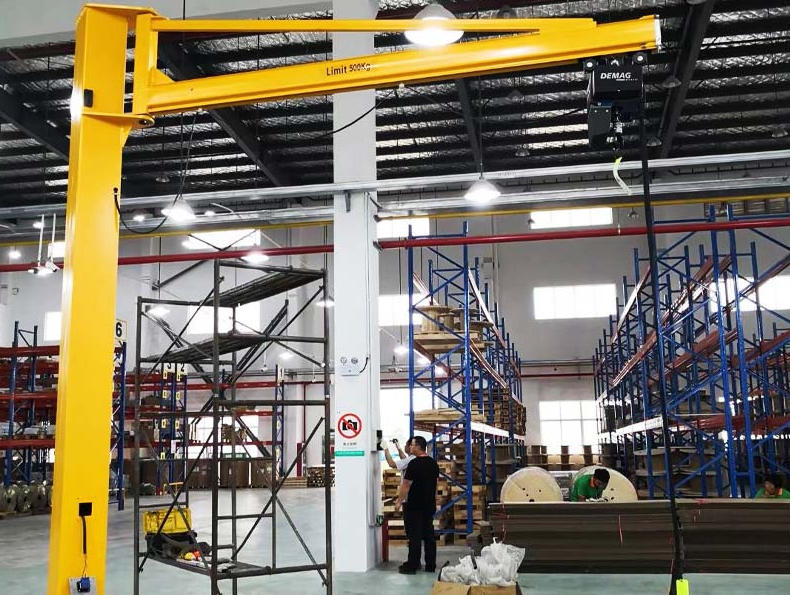
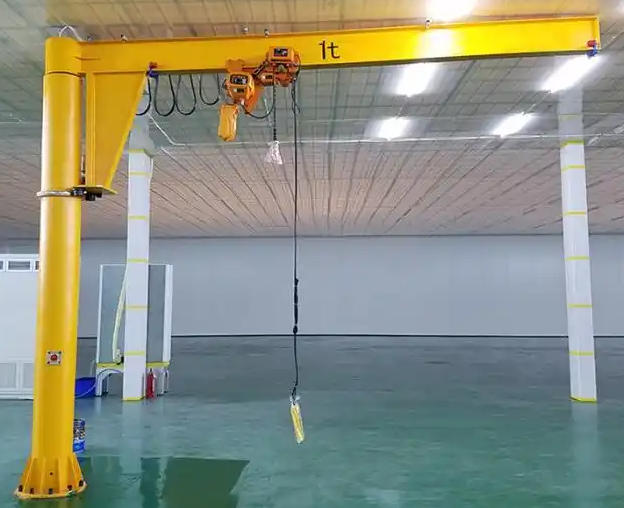
    The pillar-mounted jib crane consists of a pillar, a slewing arm, a jib drive unit, and an electric hoist. The base of the pillar is anchored to a concrete foundation using anchor bolts; a motor-driven reducer unit rotates the jib arm, while the electric hoist travels back and forth along the jib

  • 2026-07-10 10:28:02

    Installation and Operational Testing of Mobile Cantilever Jib Cranes

    I. Hoisting Tests:No-load test run: When the electric hoist is raised or lowered along the beam and stopped at any height, there must be no downward slippage; the upper limit position of the hoist must be calibrated, and the accuracy of the limit switch position verified.Rated load test: Before test

+8615053552500